










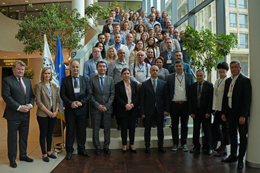
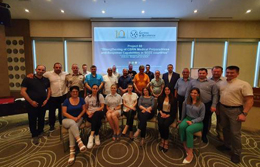
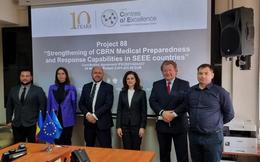
Training Center in The Republic of Azerbaijan
Contacts
- Academy of the Ministry of Emergency Situations
- Email: akademiya@fhn.gov.az
Downloadable materials
 P88 HANDBOOK_CBRNE SOPS GUIDELINES (Azerbaijan)
 Training Materials AZE (archive)
Azerbaijan Sharpens CBRN Medical Readiness through National Table-Top Exercise and Close-out Discussions
Azerbaijan completed a national CBRN emergency medicine table-top exercise in Baku and then reviewed Project 88 results with senior counterparts, identifying priorities to sustain coordination, training, and crisis communication for high-impact chemical incidents.
CBRN risk context
Modern healthcare, laboratories, and municipal services depend on hazardous substances that bring clear societal benefits, yet they can also create serious health and environmental consequences when accidents occur. A toxic release can quickly overwhelm routine emergency procedures, especially when large numbers of people are exposed, hospitals receive contaminated patients, and rumours spread faster than verified information. Strong preparedness, including coordinated decision-making, decontamination arrangements, and clear public messaging, reduces harm and helps maintain trust during rapidly evolving incidents.
A national exercise built around a transport-related chemical emergency
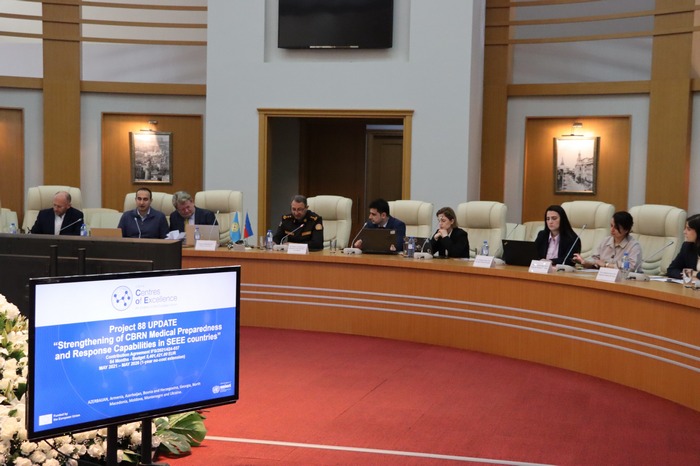
On 27–28 April 2026 in Baku, Azerbaijan carried out a National CBRN Emergency Medicine Table-Top Exercise designed to test senior-level coordination, medical response planning, and health system readiness in a high-pressure scenario.
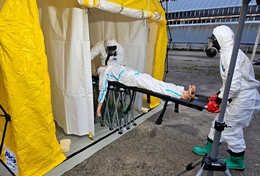
The scenario simulated a major road traffic accident during morning rush hour on the M1 highway near the Jeyranbatan Reservoir and Saray settlement. A tanker transporting anhydrous ammonia collided with a passenger bus and a car, overturned, and began releasing a pressurised ammonia cloud. The incident triggered multiple casualties suffering breathing difficulties and eye irritation, while emergency lines were flooded with calls describing a “choking smell” and a visible mist. As the discussion progressed, responders had to establish safe zones, organise triage, apply rapid water-based decontamination, and manage the arrival of self-evacuated casualties at hospitals. Later developments introduced a wind shift toward populated areas, public alarm about potential water contamination, and the need to coordinate with water authorities and deliver calm, accurate risk communication.
Whole-of-system participation
Participation reflected the breadth of Azerbaijan’s response architecture. The table-top exercise brought together the Management Union of Medical Territorial Units in Azerbaijan (TABİB) and multiple specialised structures of the Ministry of Emergency Situations (MES), including the Isotope Special Combine, Civil Defence Troops, the State Agency for the Regulation of Nuclear and Radiological Activities, the Main Operations Department, the Main Department for Organization of Emergency Response and Recovery Operations, and the MES Medical Service. This mix ensured that operational, technical, and medical perspectives were tested together, from incident scene safety to hospital contamination control and public information management.
What changed as a result of the exercise
The exercise provided more than a technical rehearsal. It allowed senior leaders and specialists to stress-test how decisions are made when information is incomplete and time is limited. Working through one shared incident clarified responsibilities for hazard identification, zoning, casualty handling, hospital reception of contaminated patients, and the management of “worried well.” It also helped highlight practical gaps, including specialised equipment needs, access to technical support, and coordination arrangements for longer-term containment and recovery where responsibilities may be split across agencies.
The action was implemented under EU CBRN CoE Project 88, “Strengthening of CBRN Medical Preparedness and Response Capabilities in South East and Eastern European countries,” funded by the European Union and implemented by the Science and Technology Centre in Ukraine (STCU), and is part of the EU CBRN Risk Mitigation Centres of Excellence Initiative.
Close-out meeting links exercise lessons to sustainability priorities
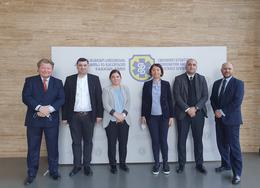
Following the national table-top exercise, on 29 April 2026 a close-out meeting was held with senior counterparts to review progress and agree priorities for sustaining capability after the project closes. The discussion included Mr Tapdig Amiraslanov, Deputy Minister of the Ministry of Emergency Situations of the Republic of Azerbaijan, and Mr Jeyhun Isgandarli, Project 88 National Focal Point and Deputy Head of the International Relations Department of the Ministry of Emergency Situations, together with the Project 88 team.
The exchange focused on practical follow-on steps, including the value of investing in a regional CBRN Emergency Medicine Training Centre, with Azerbaijan’s Civil Defence Academy identified as a strong candidate, and the continued use of high-level table-top exercises to give senior officials regular opportunities to practise crisis decision-making. Participants also discussed integrating Project 88 training content into national training programmes, developing plans to mobilise the growing pool of trained personnel in Azerbaijan and across the wider region, and exploring future work on public health at mass gatherings, food safety, and water safety. A further proposal was to deliver a short, practical familiarisation course for CBRN CoE National Focal Points in the SEEE region using the Project 88 training package.
Project background
EU CBRN CoE Project 88 supports partner countries in improving medical preparedness, response coordination, and sustainable training capacity for CBRN incidents through national-level training, exercises, and institutional cooperation. To know more: Project 88
 Azerbaijan Confirms National Training Capacity through Third CBRN Emergency Medicine Course in Baku
 Azerbaijan Confirms National Training Capacity through Third CBRN Emergency Medicine Course in Baku
 Azerbaijan Confirms National Training Capacity through Third CBRN Emergency Medicine Course in Baku
 Azerbaijan Confirms National Training Capacity through Third CBRN Emergency Medicine Course in Baku
Azerbaijan Confirms National Training Capacity through Third CBRN Emergency Medicine Course in Baku
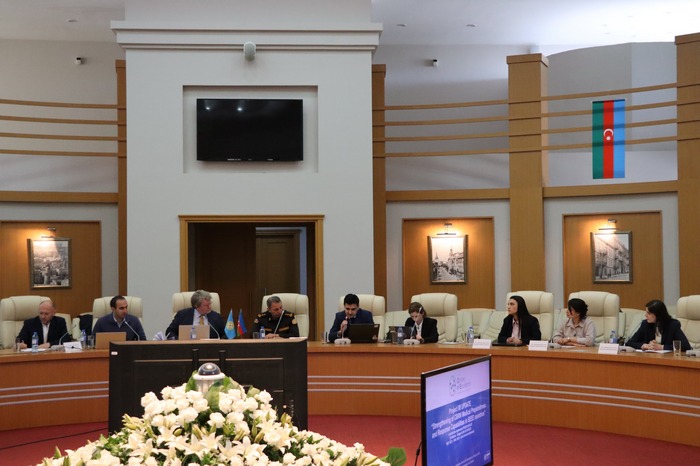
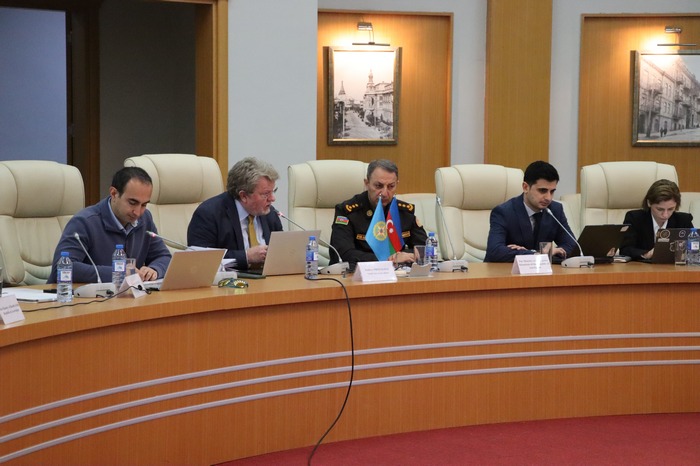
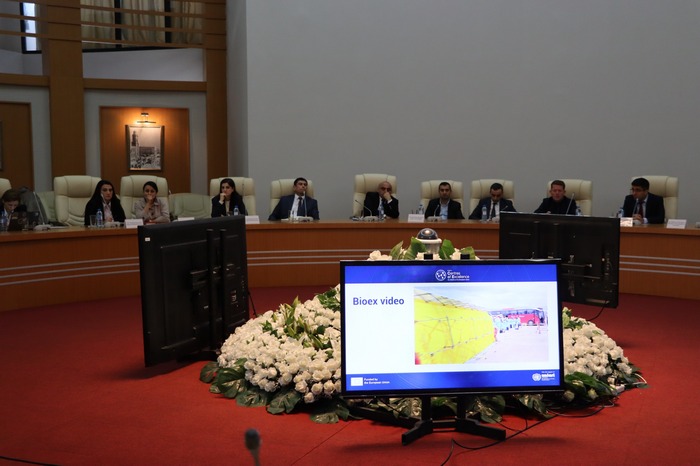
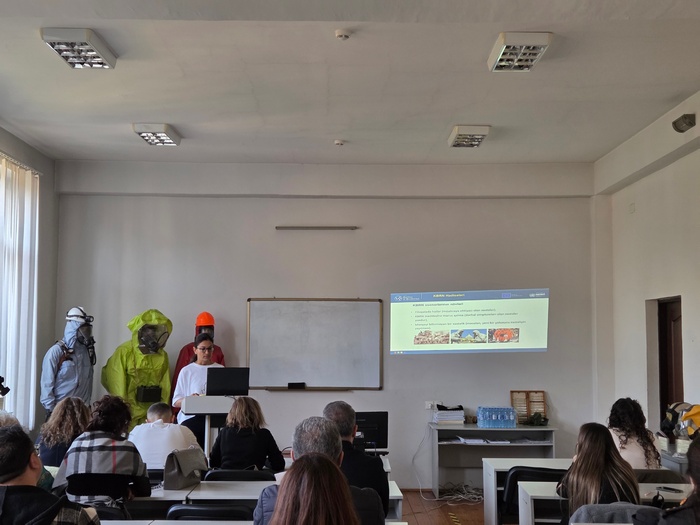
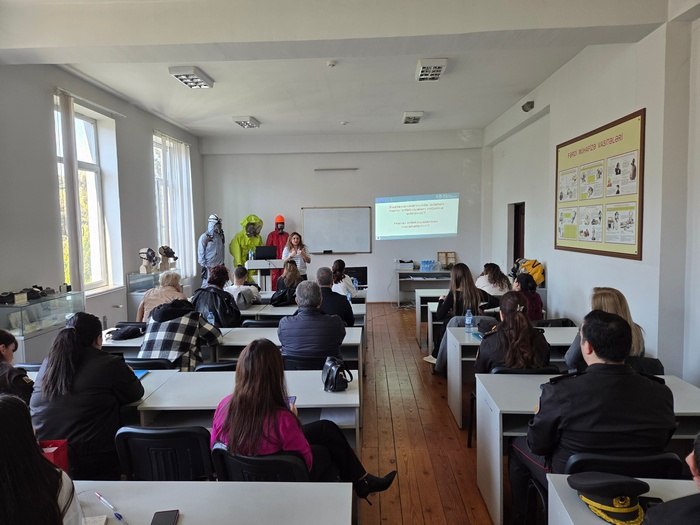
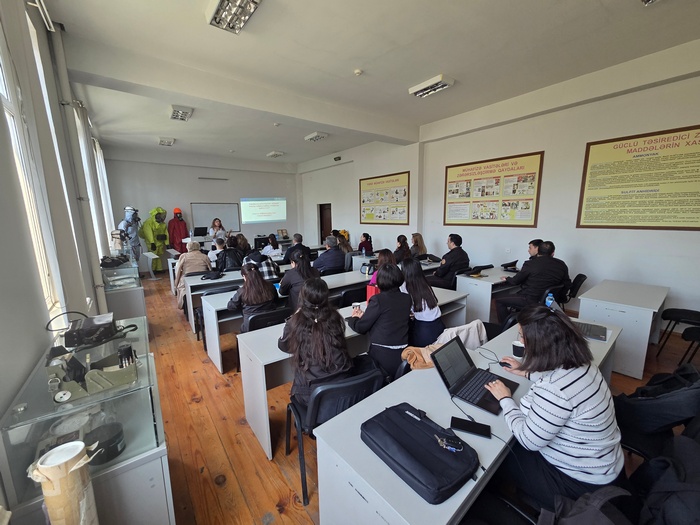
Azerbaijan completed its third national CBRN emergency medicine training on 8–9 April 2026 in Baku, reinforcing national readiness and confirming the ability of Azerbaijani Master Trainers to deliver the programme consistently to a high standard under the EU CBRN Risk Mitigation Centers of Excellence Initiative.
Why consistency matters in CBRN emergency medicine
CBRN incidents can escalate quickly from routine industrial, medical, or transport-related situations into complex emergencies involving contamination, multiple casualties, and intense public concern. In such events, outcomes depend not only on plans and equipment, but also on the reliability of training, including whether responders and hospitals apply the same procedures, terminology, and decision-making processes under pressure. Repeated national delivery is therefore essential to quality assurance, helping ensure that knowledge is retained, standards are applied uniformly, and new staff can be trained without delays.
Third national training strengthens quality assurance and national ownership
The third National CBRN Emergency Medicine Training was delivered in Baku, with the involvement of national partners, including the Academy of the Ministry of Emergency Situations of the Republic of Azerbaijan and the Azerbaijani Medical Territorial Association (TABIB). The action was implemented under EU CBRN CoE Project 88, “Strengthening of CBRN Medical Preparedness and Response Capabilities in South East and Eastern European countries,” and funded by the European Union and is part of the EU CBRN Risk Mitigation Centers of Excellence Initiative.
Unlike earlier editions focused primarily on initial roll-out, the third national course served as a quality-control milestone. It assessed the national training team’s ability to conduct the programme consistently and independently, maintaining the same instructional quality, structure, and learning outcomes over time. The course, therefore, demonstrated not only continued engagement but also the maturity of Azerbaijan’s national training capacity.
Training that follows the full chain of response
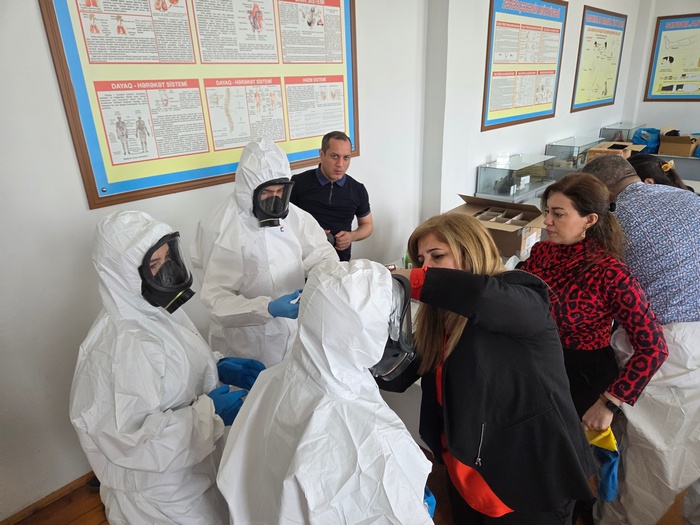
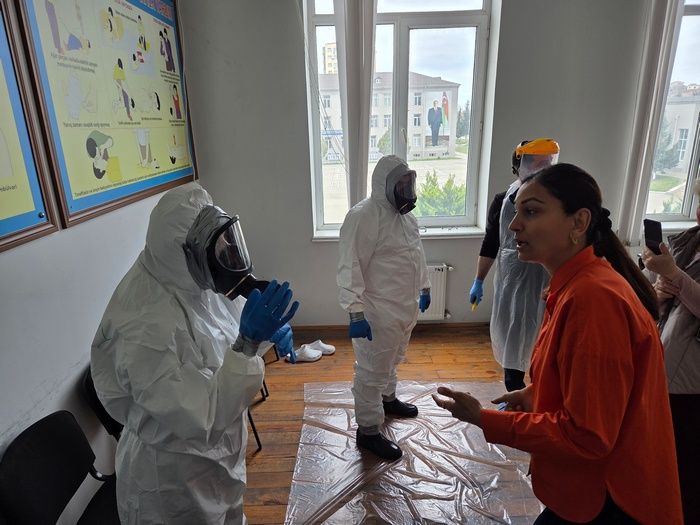
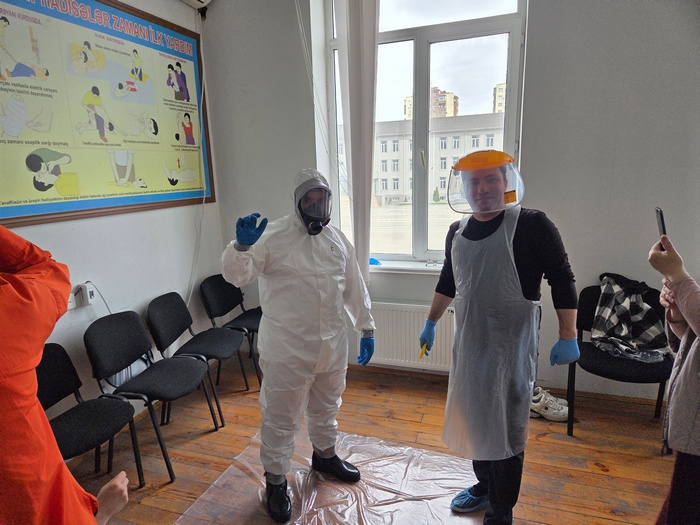
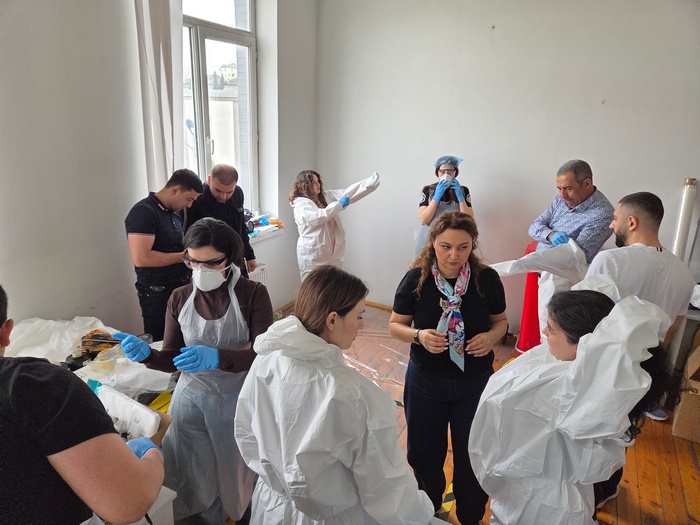
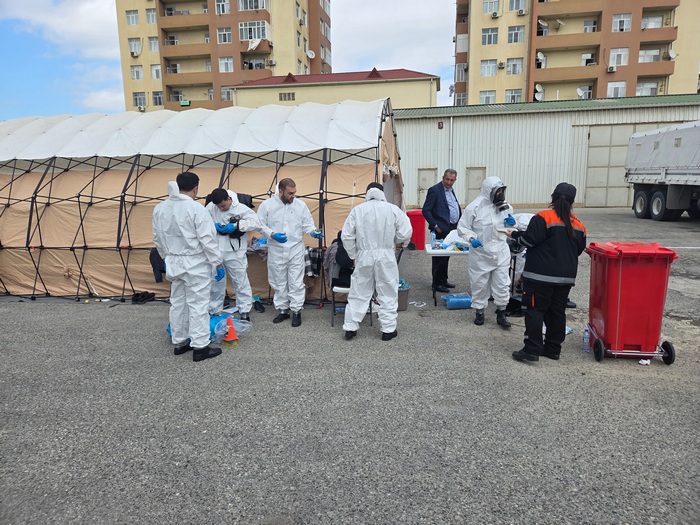
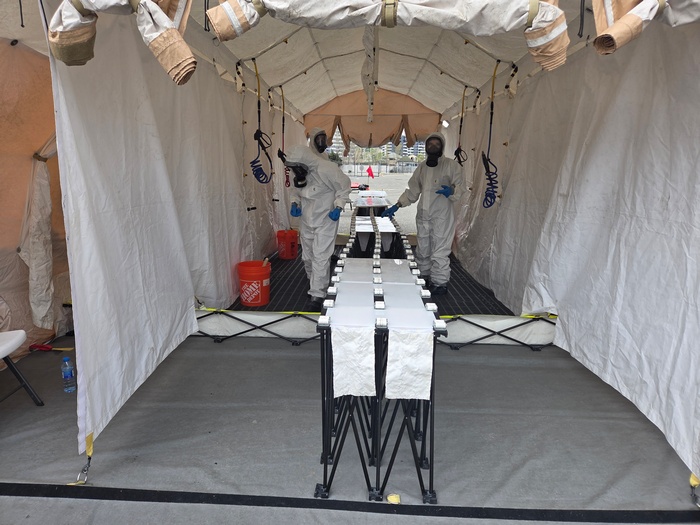
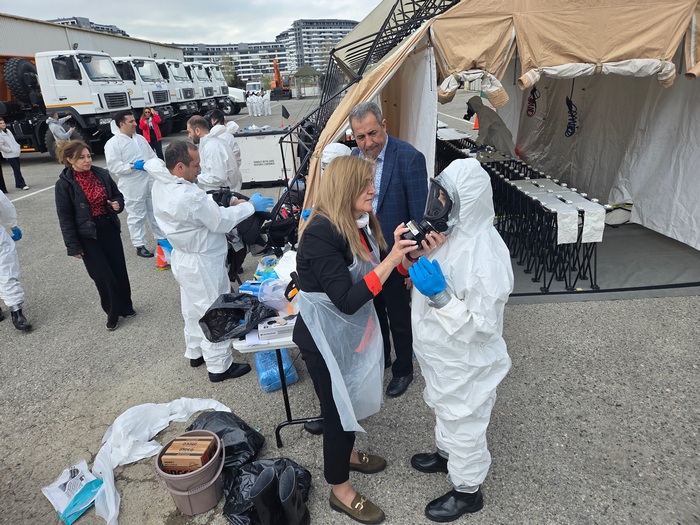
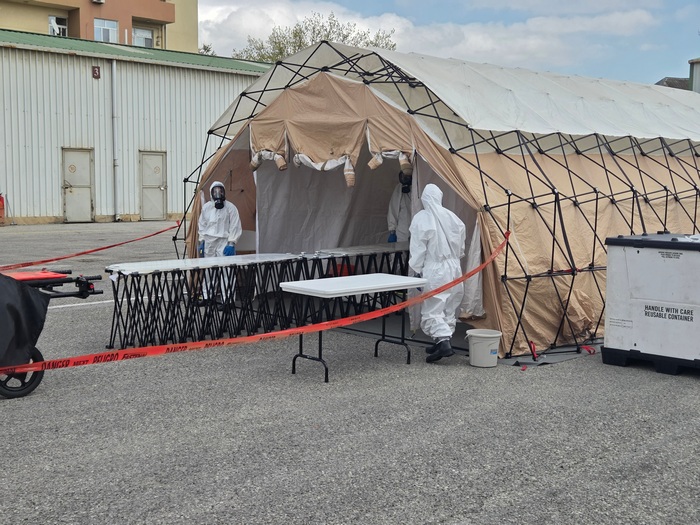
The programme continued to address the needs of the full emergency medicine response chain. Sessions supported pre-hospital responders with core actions such as rapid assessment, triage, decontamination, and stabilisation. Hospital teams strengthened preparedness for receiving contaminated patients, applying contamination control measures, and coordinating with field services. Managers and institutional leaders focused on decision-making, resource allocation, and coordination mechanisms required during large-scale incidents. Para-medical and medical personnel further developed clinical understanding relevant to CBRN-related diagnosis, treatment, and patient management.
This whole-of-system approach supports interoperability, ensuring that procedures, roles, and communication pathways remain aligned from the incident scene to hospital care and strategic coordination.
Practical delivery and professional exchange
The course combined interactive instruction with practical application through exercises and scenario-based work. Participants tested how to apply procedures in realistic conditions, practiced cross-institution coordination, and strengthened decision-making under time pressure. In parallel, the training encouraged professional exchange among responders and healthcare staff, supporting a shared operational language and stronger working relationships between institutions.
Sustained impact for Azerbaijan and the wider region
Delivering a third national training consolidates Azerbaijan’s progress toward a sustainable CBRN emergency medicine training system. It demonstrates that the national team can maintain quality across repeated deliveries, a key requirement for long-term preparedness and for scaling training to wider audiences. The experience also contributes to regional resilience by strengthening a consistent approach to CBRN medical preparedness across South East and Eastern Europe.
Project background
EU CBRN CoE Project 88, “Strengthening of CBRN Medical Preparedness and Response Capabilities in South East and Eastern European countries,” supports partner countries in improving medical preparedness, response coordination, and sustainable training capacity for CBRN incidents through national-level training and institutional cooperation.
 Azerbaijan Confirms National Training Capacity through Third CBRN Emergency Medicine Course in Baku
 Azerbaijan Confirms National Training Capacity through Third CBRN Emergency Medicine Course in Baku
 Azerbaijan Confirms National Training Capacity through Third CBRN Emergency Medicine Course in Baku
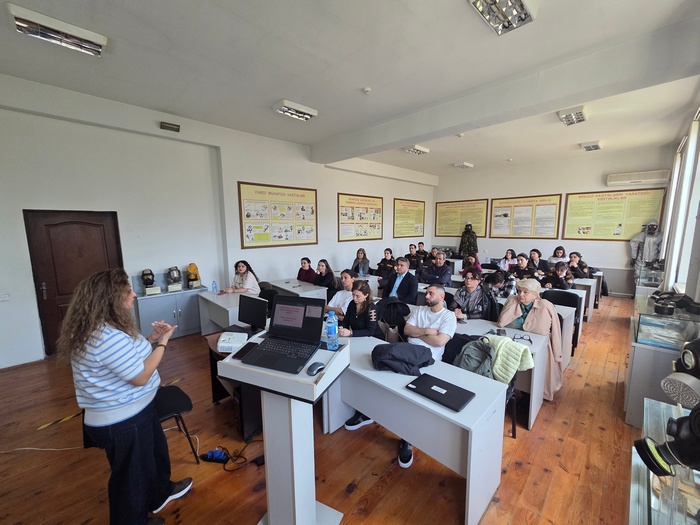 Azerbaijan Confirms National Training Capacity through Third CBRN Emergency Medicine Course in Baku
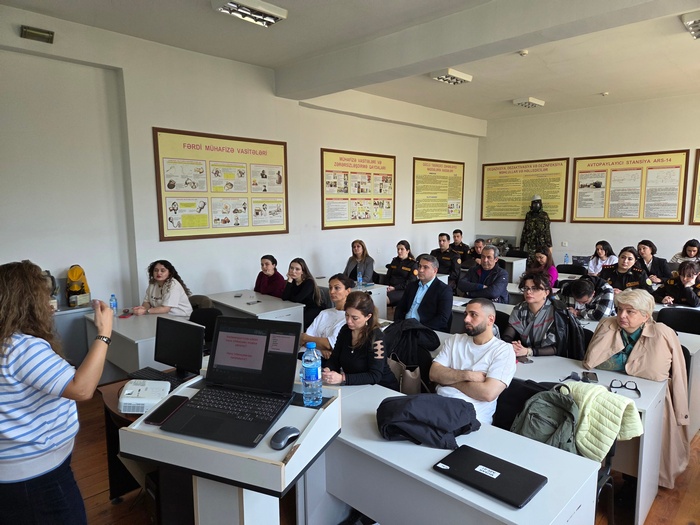 Azerbaijan Confirms National Training Capacity through Third CBRN Emergency Medicine Course in Baku
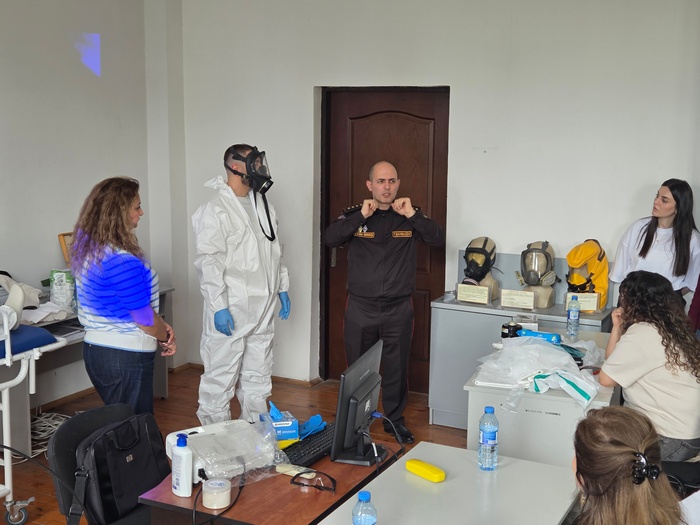 Azerbaijan Confirms National Training Capacity through Third CBRN Emergency Medicine Course in Baku
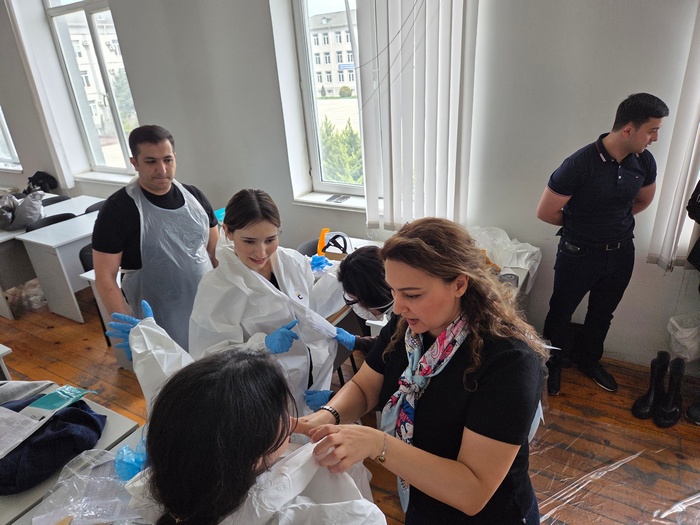 Azerbaijan Confirms National Training Capacity through Third CBRN Emergency Medicine Course in Baku
 Azerbaijan Confirms National Training Capacity through Third CBRN Emergency Medicine Course in Baku
 Azerbaijan Confirms National Training Capacity through Third CBRN Emergency Medicine Course in Baku
 Azerbaijan Confirms National Training Capacity through Third CBRN Emergency Medicine Course in Baku
 Azerbaijan Confirms National Training Capacity through Third CBRN Emergency Medicine Course in Baku
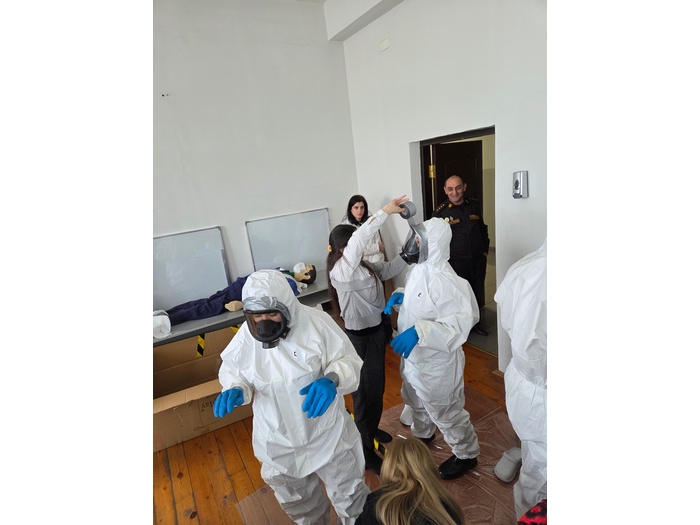 Azerbaijan Confirms National Training Capacity through Third CBRN Emergency Medicine Course in Baku
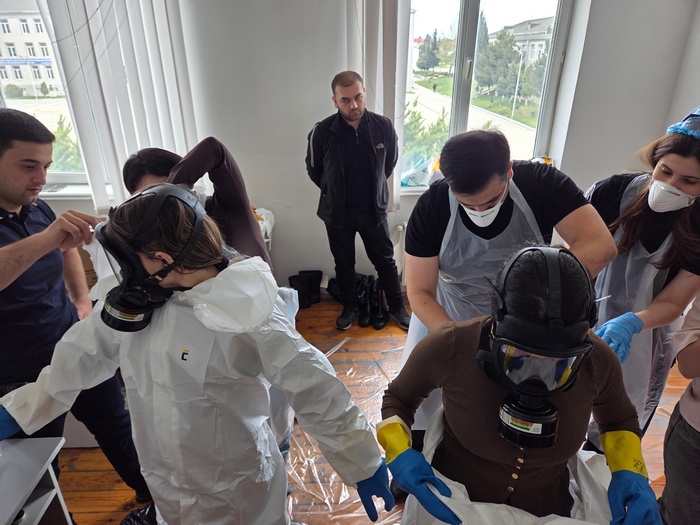 Azerbaijan Confirms National Training Capacity through Third CBRN Emergency Medicine Course in Baku
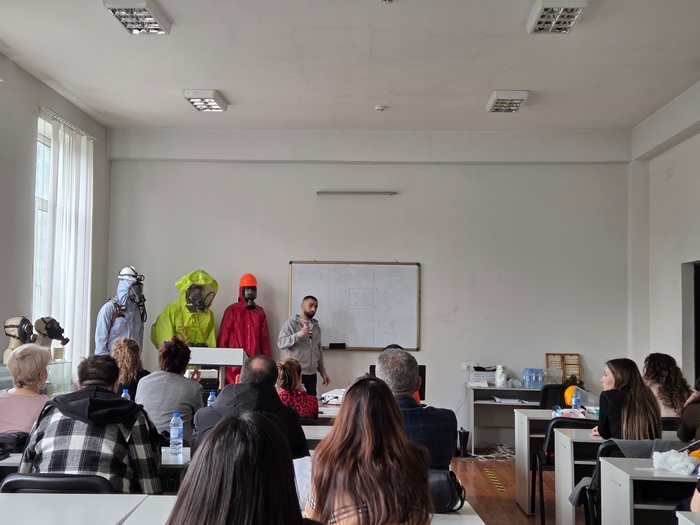 Azerbaijan Confirms National Training Capacity through Third CBRN Emergency Medicine Course in Baku
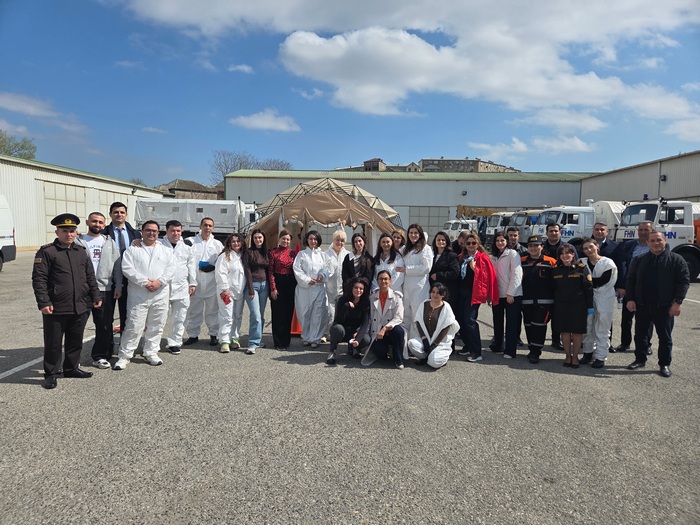 Azerbaijan Confirms National Training Capacity through Third CBRN Emergency Medicine Course in Baku
 Azerbaijan Confirms National Training Capacity through Third CBRN Emergency Medicine Course in Baku
 Azerbaijan Confirms National Training Capacity through Third CBRN Emergency Medicine Course in Baku
 Azerbaijan Confirms National Training Capacity through Third CBRN Emergency Medicine Course in Baku
 Azerbaijan Confirms National Training Capacity through Third CBRN Emergency Medicine Course in Baku
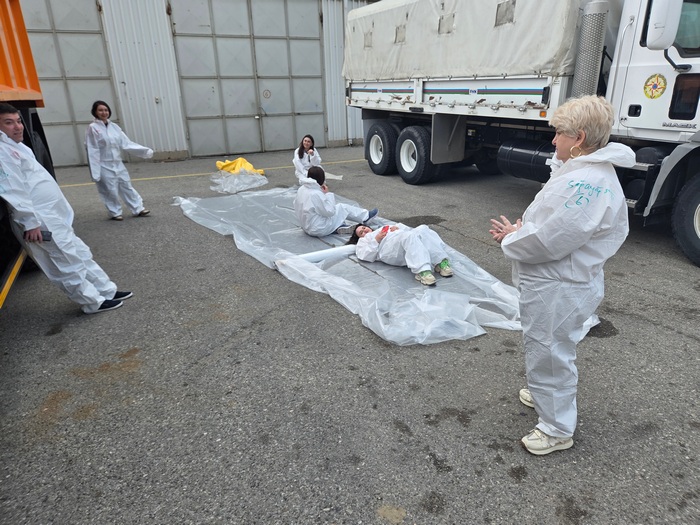 Azerbaijan Confirms National Training Capacity through Third CBRN Emergency Medicine Course in Baku
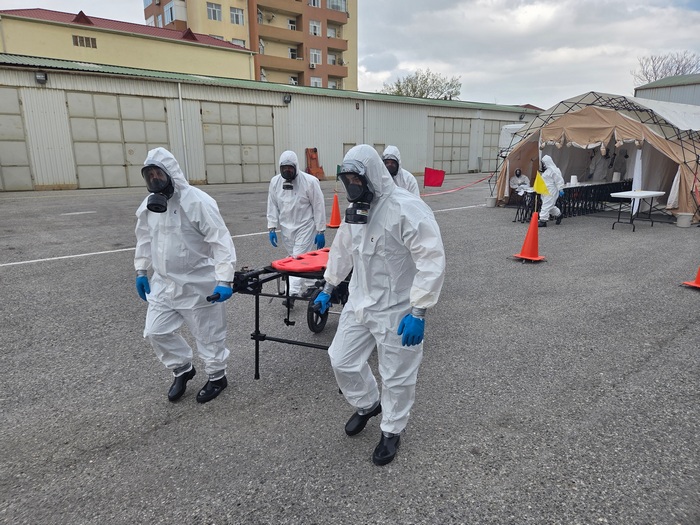 Azerbaijan Confirms National Training Capacity through Third CBRN Emergency Medicine Course in Baku
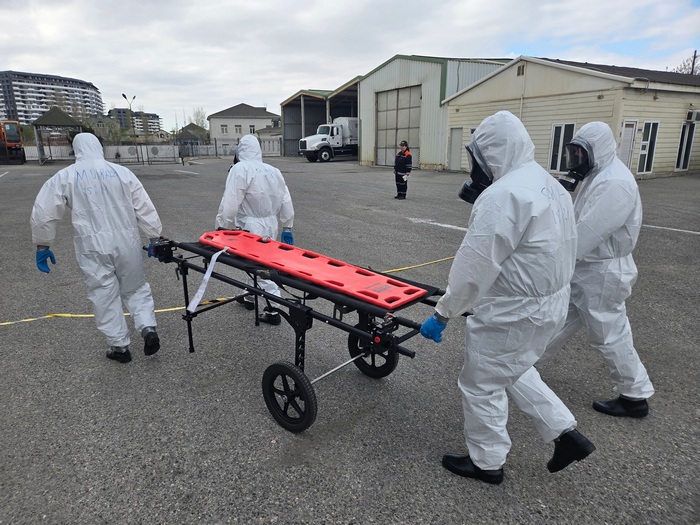 Azerbaijan Confirms National Training Capacity through Third CBRN Emergency Medicine Course in Baku
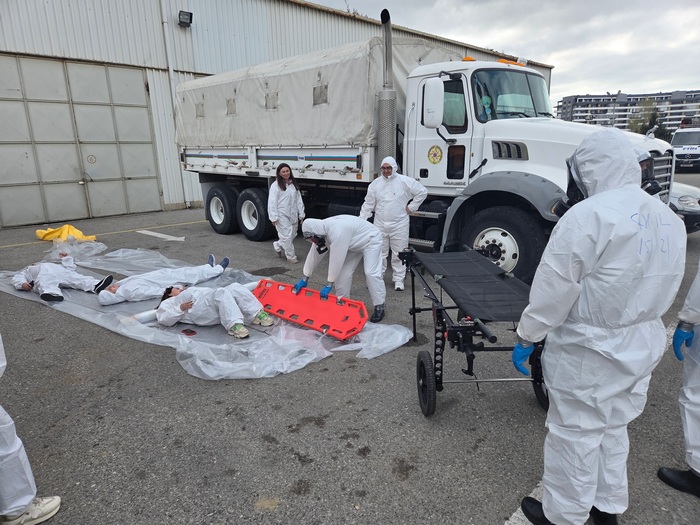 Azerbaijan Confirms National Training Capacity through Third CBRN Emergency Medicine Course in Baku
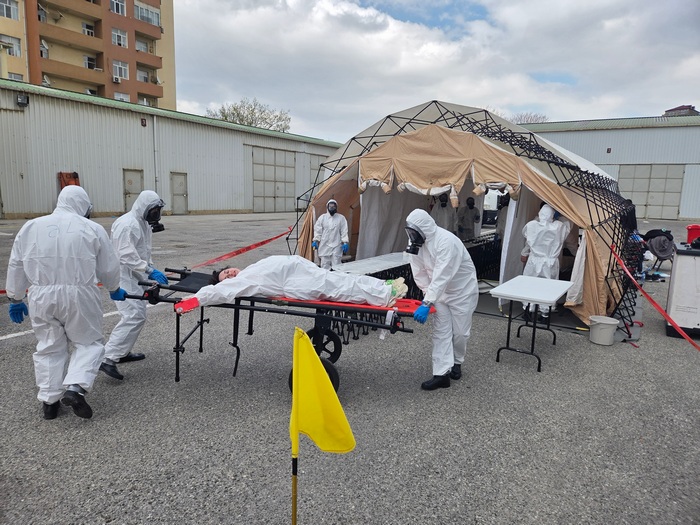 Azerbaijan Confirms National Training Capacity through Third CBRN Emergency Medicine Course in Baku
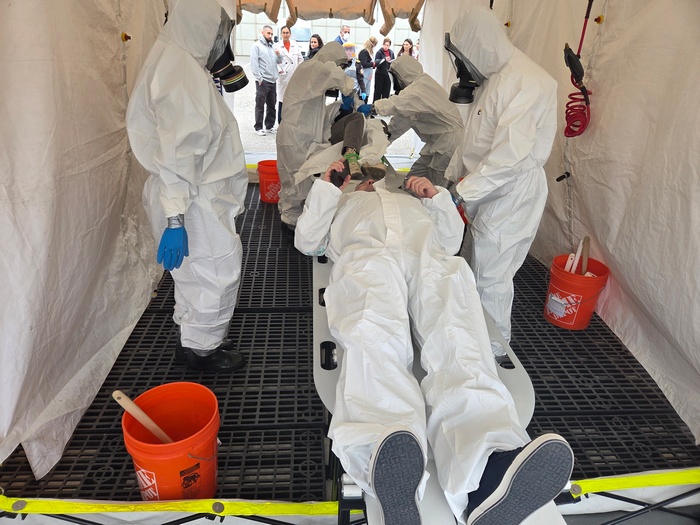 Azerbaijan Confirms National Training Capacity through Third CBRN Emergency Medicine Course in Baku
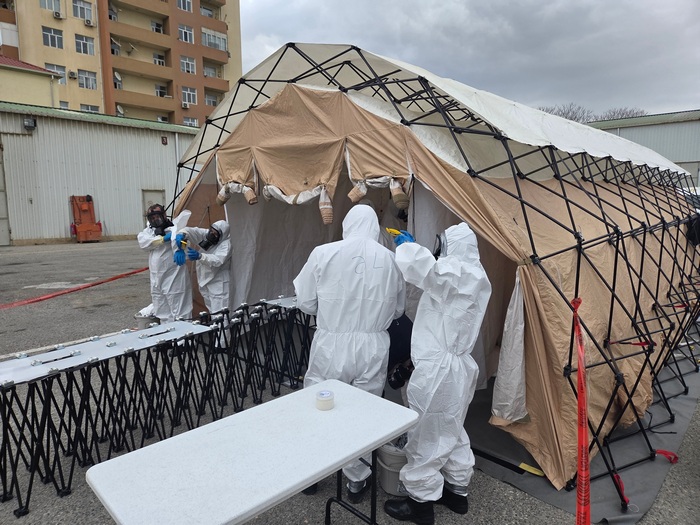 Azerbaijan Confirms National Training Capacity through Third CBRN Emergency Medicine Course in Baku
Azerbaijan Expands National CBRN Medical Readiness Through Second Training with EU CBRN CoE Support
Azerbaijan completed its second national CBRN emergency medicine training in Baku, improving coordination between responders, hospitals, and emergency managers under EU CBRN CoE support.
CBRN risk context
Chemical, Biological, Radiological, and Nuclear (CBRN) incidents can arise from materials used in healthcare, industry, research, and transport. Although these materials are essential in daily life, accidents or misuse can quickly create complex emergencies involving contamination, mass casualties, and public concern. In these situations, effective response depends on how well emergency services, hospitals, and public authorities coordinate decisions, communication, and patient care. Strengthening preparedness is therefore essential to reduce harm, protect responders, and maintain continuity of medical services.
Azerbaijan advances its national CBRN medical training system
On 24–25 February 2026, in Baku, the Science and Technology Center in Ukraine (STCU), in collaboration with the Academy of the Ministry of Emergency Situations of the Republic of Azerbaijan and the Azerbaijani Management Union of Medical Territorial Units (TABIB), conducted the second National CBRN Emergency Medicine Training in Azerbaijan.
The training was delivered under EU CBRN CoE Project 88, “Strengthening of CBRN Medical Preparedness and Response Capabilities in South East and Eastern European countries,” with support from the European Commission’s CBRN Risk Mitigation Centres of Excellence.
Led by Azerbaijani Master Trainers, this edition showcased Project 88’s capacity-building outcomes, demonstrating that national experts could deliver high-quality CBRN emergency medicine training independently. The second national training marked an important step in strengthening Azerbaijan’s coordinated system for CBRN medical emergencies and reinforced a repeatable approach that can be expanded over time.
Tailored learning across the full response chain
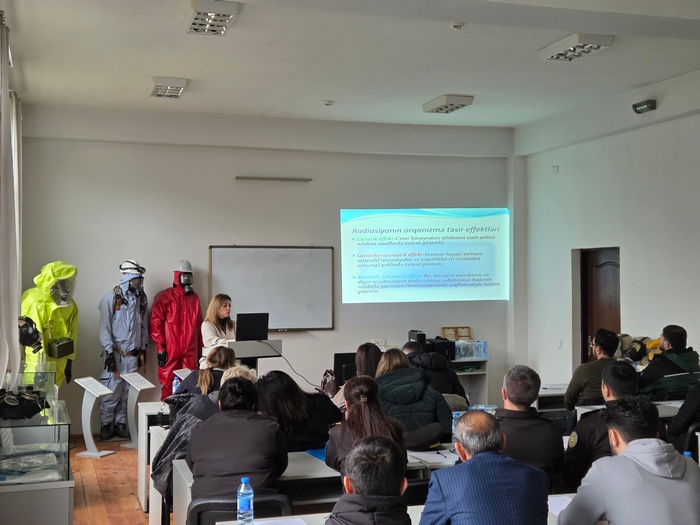
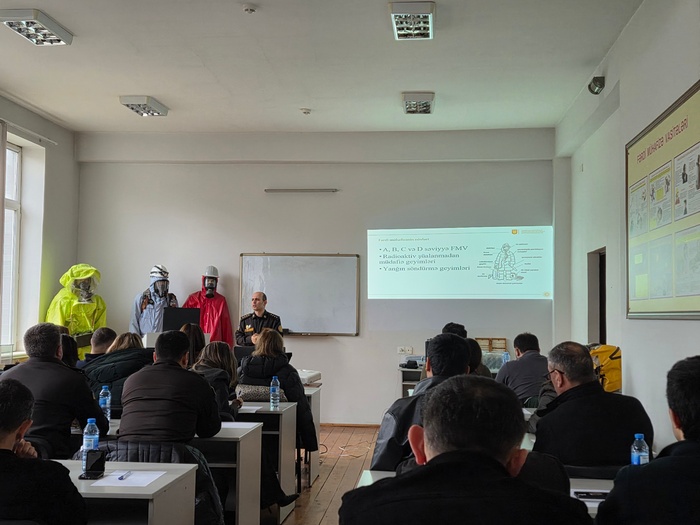
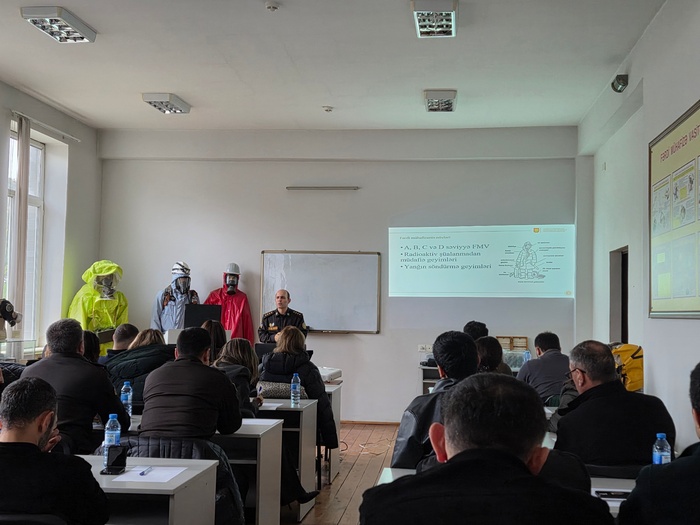
The two-day programme brought together a broad group of professionals, including first responders, hospital personnel, emergency managers, para-medical staff, and medical specialists. This multi-sector approach reflected the realities of CBRN incidents, where effective response depends on coordination across institutions and levels of responsibility.
The training was structured around target groups with specific learning objectives. First-line responders focused on pre-hospital priorities, including initial assessment, triage, decontamination, and patient stabilisation. Second-line responders concentrated on hospital-based management, including contamination control, patient care protocols, and coordination with field teams. Institutional managers addressed strategic oversight, resource allocation, and decision-making during large-scale incidents.
Para-medical personnel strengthened their skills in immediate field support, while medical personnel expanded their knowledge of diagnosis, treatment, and longer-term patient management in CBRN-related scenarios. This targeted structure helped participants deepen role-specific competencies while improving coordination across the national response system.
Practical exercises build confidence and interoperability
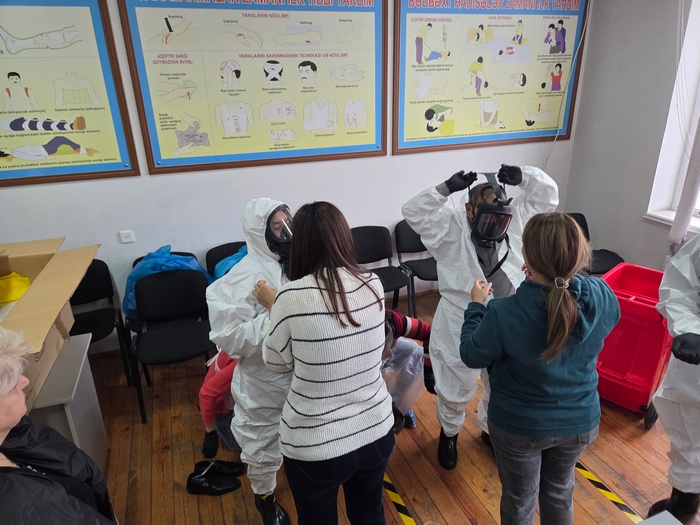
The training combined interactive lectures, practical sessions, and scenario-based simulations designed to mirror real emergency conditions. Through case studies and applied exercises, participants tested their ability to translate procedures into action, make rapid decisions, and coordinate under pressure.
These activities supported both technical learning and interagency cooperation. Participants exchanged experiences, compared approaches, and identified ways to improve collaboration among emergency responders, hospitals, and management authorities. By addressing both operational and institutional needs, the training contributed to a more integrated national response capability for incidents involving hazardous materials.
Sustainable progress and regional contribution
The successful delivery of Azerbaijan’s national training, following earlier capacity-building efforts, demonstrates growing national capability to sustain and expand CBRN emergency medicine training. It shows that Azerbaijan is strengthening both the institutional and human foundations needed for long-term preparedness.
Through this progress, Azerbaijan is also reinforcing its role as an active and capable partner within the regional network of Southeast and Eastern European countries, working to improve resilience against CBRN threats. The experience gained through this initiative provides a strong basis for future national development and regional cooperation in CBRN emergency medicine preparedness and response.
Project background
The training in Baku was delivered under EU CBRN CoE Project 88, “Strengthening of CBRN Medical Preparedness and Response Capabilities in South East and Eastern European countries.” The project supports partner countries in improving medical preparedness, response coordination, and sustainable training capacity for CBRN incidents through national-level training and institutional cooperation.
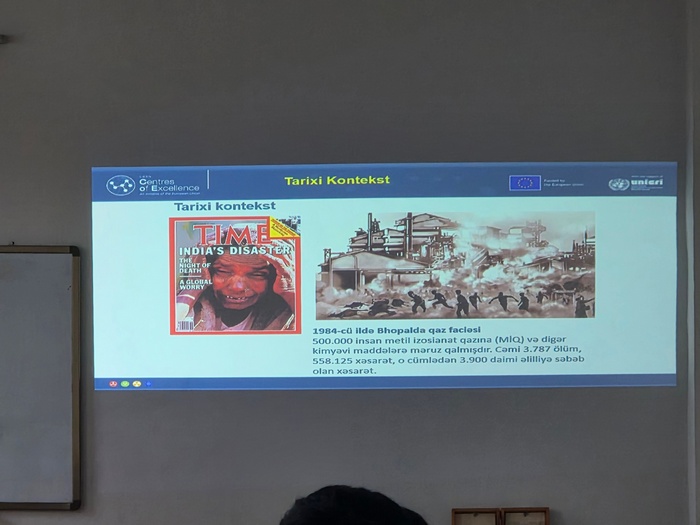 Azerbaijan Expands National CBRN Medical Readiness Through Second Training with EU CBRN CoE Support
 Azerbaijan Expands National CBRN Medical Readiness Through Second Training with EU CBRN CoE Support
 Azerbaijan Expands National CBRN Medical Readiness Through Second Training with EU CBRN CoE Support
 Azerbaijan Expands National CBRN Medical Readiness Through Second Training with EU CBRN CoE Support
 Azerbaijan Expands National CBRN Medical Readiness Through Second Training with EU CBRN CoE Support
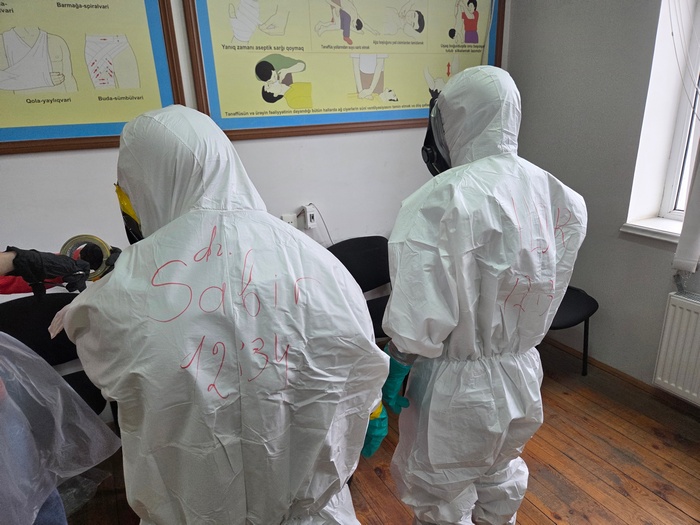 Azerbaijan Expands National CBRN Medical Readiness Through Second Training with EU CBRN CoE Support
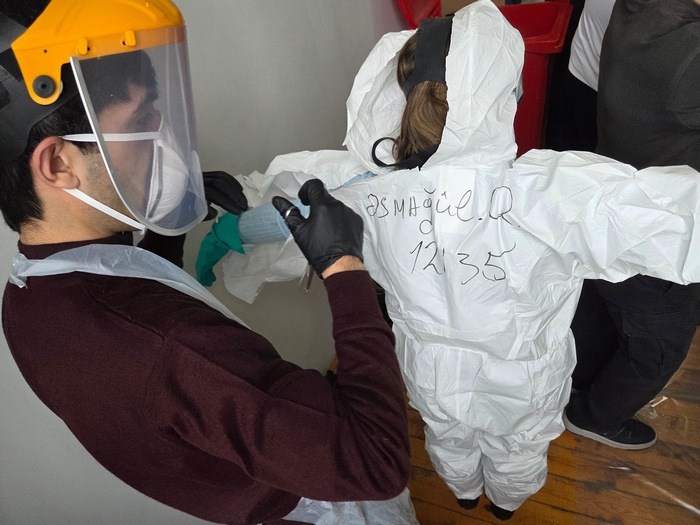 Azerbaijan Expands National CBRN Medical Readiness Through Second Training with EU CBRN CoE Support
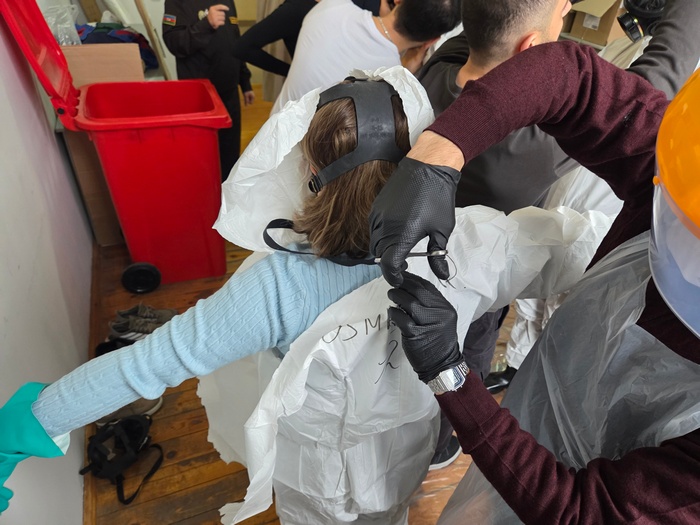 Azerbaijan Expands National CBRN Medical Readiness Through Second Training with EU CBRN CoE Support
Azerbaijan Strengthens CBRN Medical Preparedness Through First National Training
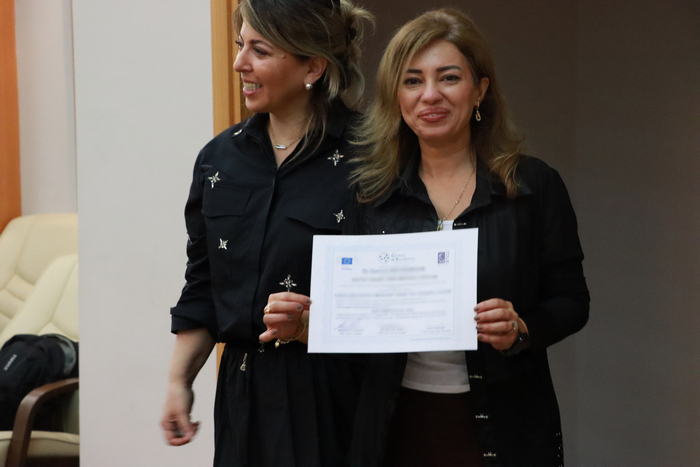
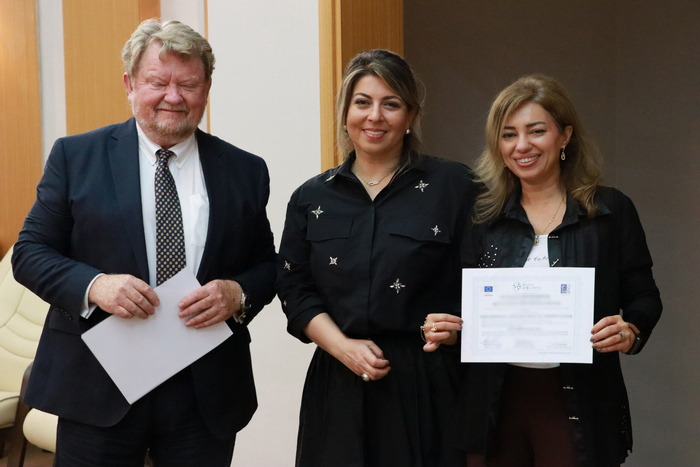
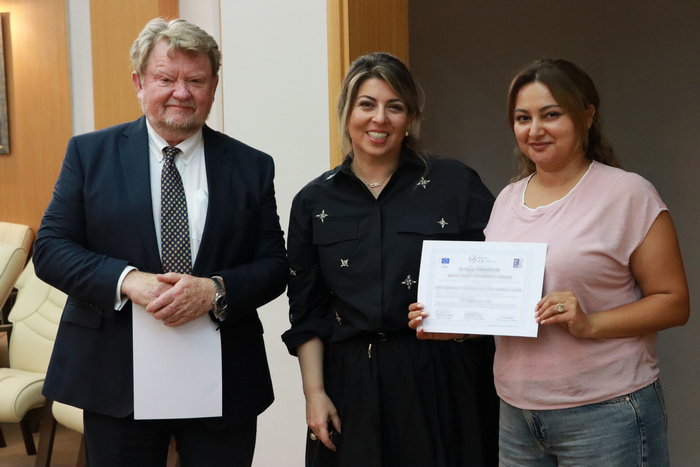
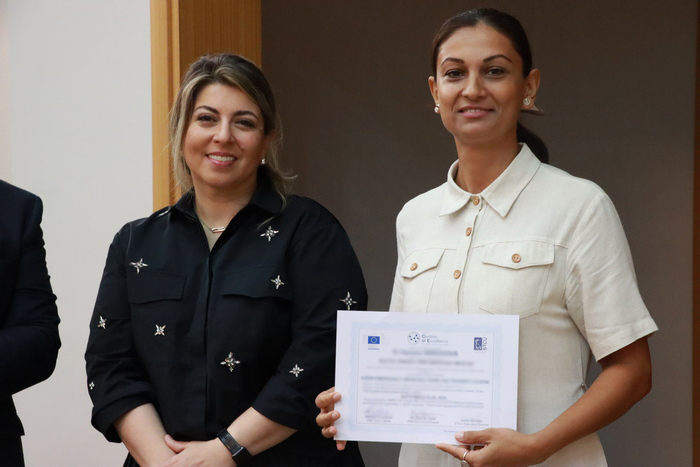
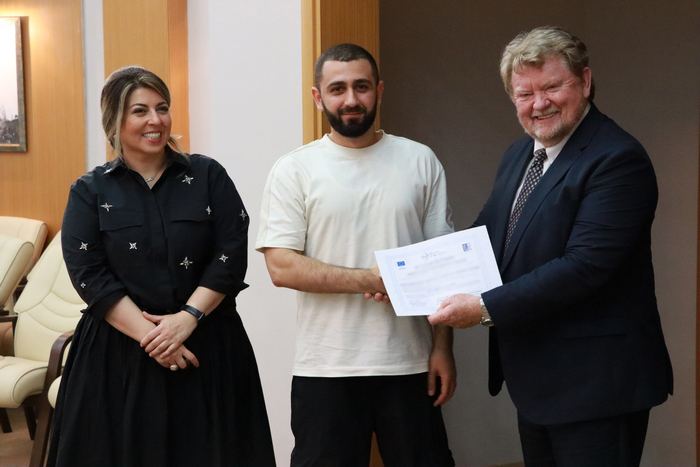
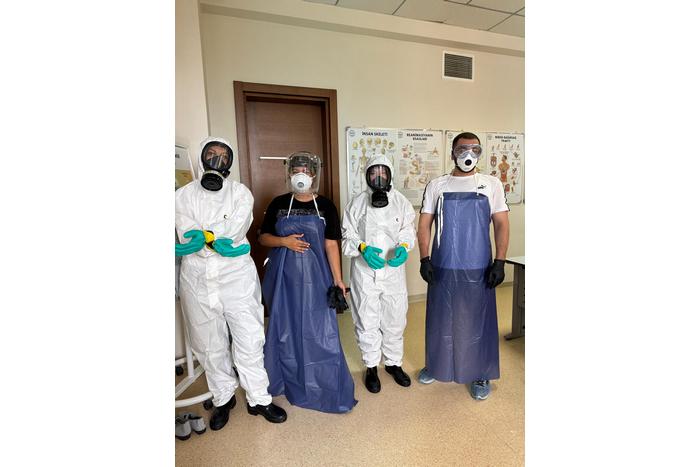
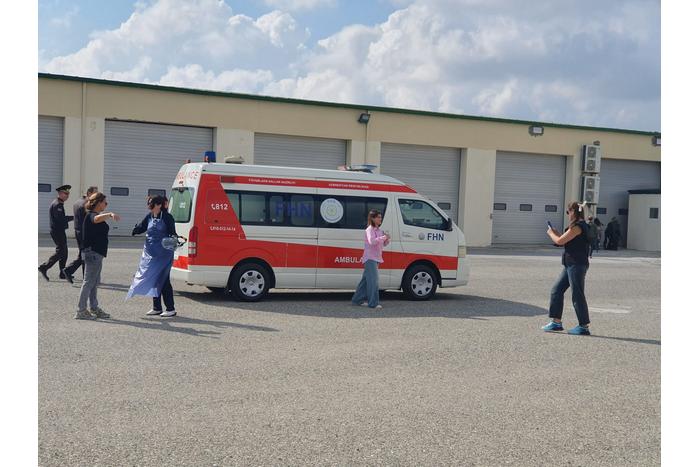
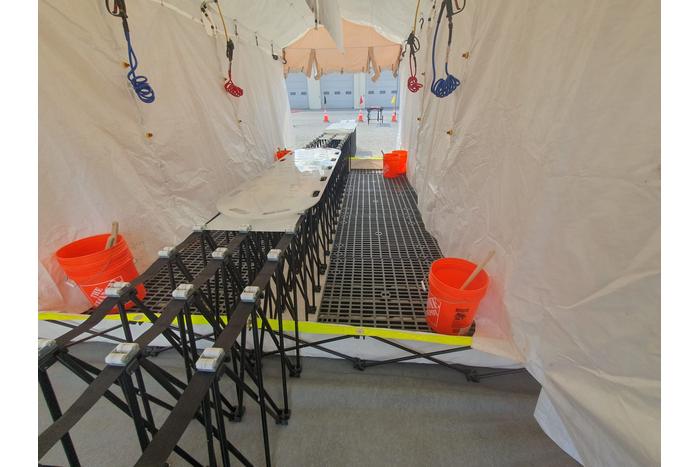
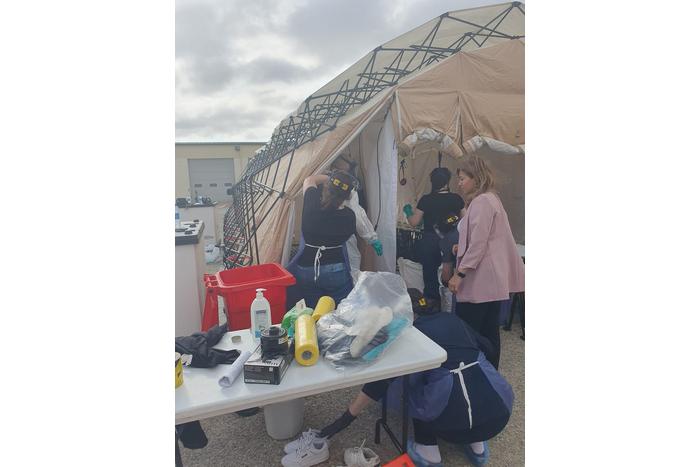
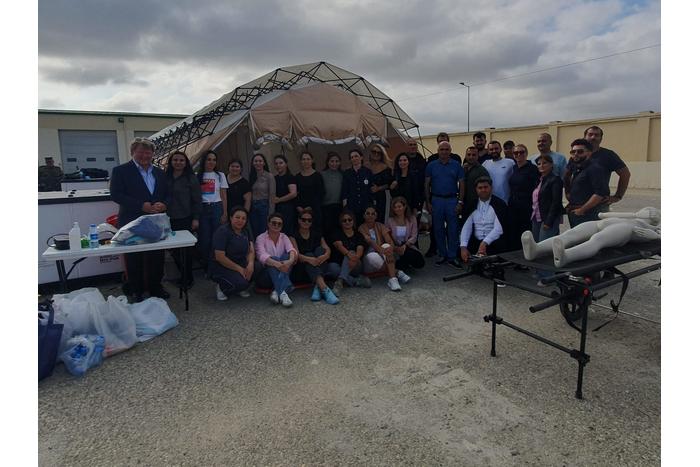
Baku, Azerbaijan, September 25–26, 2025 — The Science and Technology Center in Ukraine (STCU), in collaboration with the Academy of the Ministry of Emergency Situations of the Republic of Azerbaijan and the Azerbaijani Management Union of Medical Territorial Units (TABIB), successfully conducted the First National CBRN Emergency Medicine Training in Baku. This milestone event was held under the framework of the EU CBRN CoE Project 88 "Strengthening of CBRN Medical Preparedness and Response Capabilities in South East and Eastern European countries", funded by the European Commission’s Foreign Policy Instrument. The training represents a major advancement in Azerbaijan’s ongoing efforts to develop a coordinated and sustainable national system for managing CBRN medical emergencies.Building Capacity Through Train-the-Trainers Workshop
Prior to the national training, STCU organized a Train-the-Trainers (ToT) workshop, held in Baku from September 22 to 24, 2025. This preparatory course was designed to give the Azerbaijani national training team both the technical knowledge and pedagogical skills needed to operate safely in a CBRN environment and to effectively train their colleagues across the country. The ToT workshop laid the foundation for national ownership of CBRN training activities, ensuring that Azerbaijani trainers are fully equipped to deliver future courses independently. This approach reflects the core objective of Project 88—to build and transfer sustainable expertise to partner countries, enabling them to continue strengthening their emergency medical response capabilities beyond the life of the project.Comprehensive National Training Program
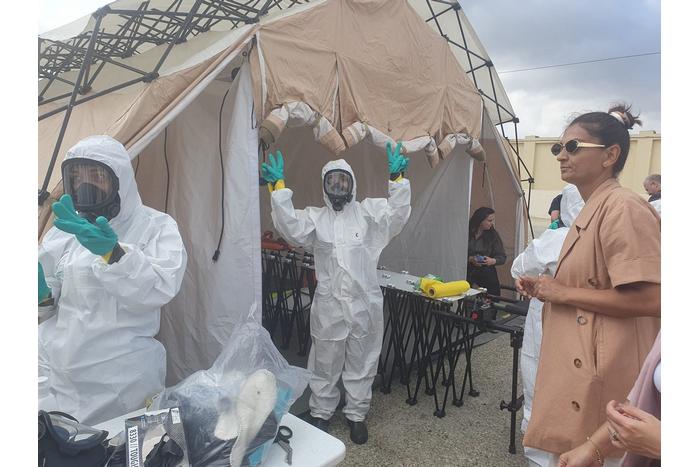
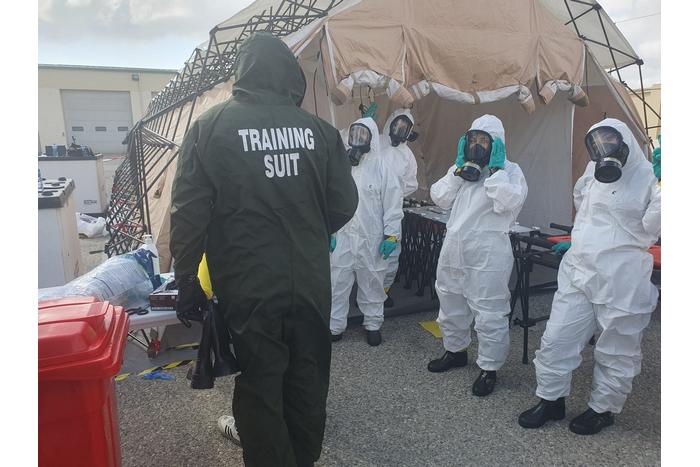
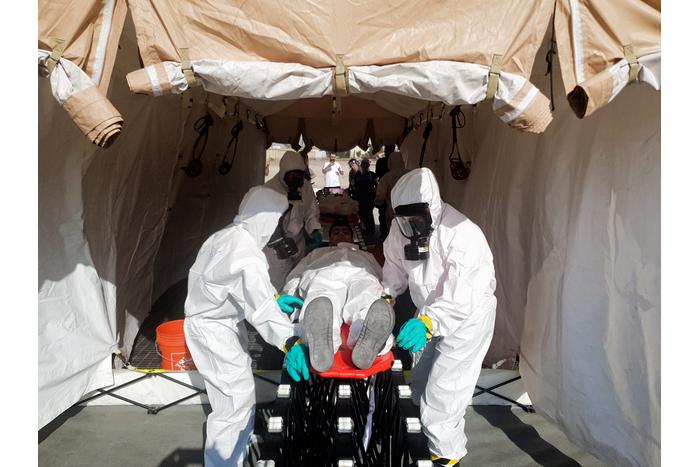
The two-day National CBRN Emergency Medicine Training brought together a diverse group of professionals, including first responders, hospital personnel, emergency managers, and medical specialists. The program aimed to enhance coordination and technical proficiency at every level of the CBRN response chain. The training was structured around several target groups, each with specific learning objectives: First-Line CBRN Emergency Medicine Responders: Focused on pre-hospital management of CBRN incidents, including initial assessment, triage, decontamination, and stabilization of patients. Second-Line CBRN Responders: Concentrated on hospital-based management, equipping healthcare professionals with protocols for patient care, contamination control, and coordination with on-site responders. Institutional Managers: Received guidance on strategic oversight, resource allocation, and decision-making during large-scale CBRN incidents. Para-Medical Personnel: Strengthened their skills in providing immediate care and support in the field, particularly in pre-hospital settings. Medical Personnel: Expanded their understanding of diagnosis, treatment, and long-term patient management in CBRN-related scenarios.Practical and Interactive Learning
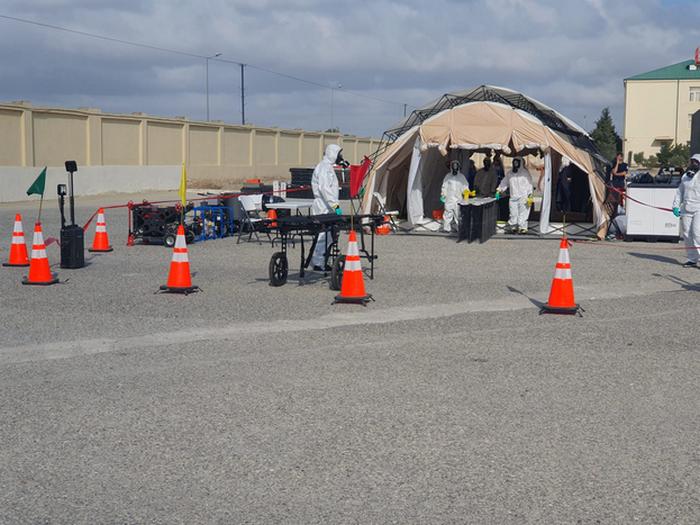
The training combined interactive lectures, practical sessions, and scenario-based simulations that mirrored real-world emergencies. Participants engaged in case studies that tested their ability to apply theory to practice, make rapid decisions, and coordinate across institutions under pressure. By addressing the unique needs of each target group, the training contributed to building a robust and integrated national response system, capable of efficiently managing incidents involving hazardous materials. The sessions also encouraged collaboration and knowledge exchange among Azerbaijan’s CBRN emergency medicine professionals.Sustainable Results and Future Impact
The successful delivery of both the Train-the-Trainers workshop and the first national training course marks an important achievement for Azerbaijan under Project 88. It demonstrates that the country is developing the institutional and human capacity necessary to sustain and expand its national training programs in CBRN medical preparedness. Through these efforts, Azerbaijan has strengthened its position as a proactive and capable partner within the regional network of South East and Eastern European countries working together to enhance resilience to CBRN threats. The experience gained through this initiative will serve as a strong foundation for future national and regional collaboration in the field of CBRN emergency medicine.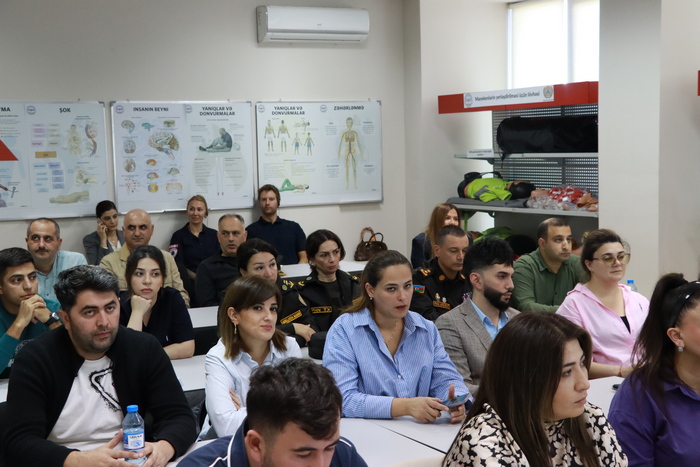 Azerbaijan Strengthens CBRN Medical Preparedness Through First National Training
 Azerbaijan Strengthens CBRN Medical Preparedness Through First National Training
 Azerbaijan Strengthens CBRN Medical Preparedness Through First National Training
 Azerbaijan Strengthens CBRN Medical Preparedness Through First National Training
 Azerbaijan Strengthens CBRN Medical Preparedness Through First National Training
 Azerbaijan Strengthens CBRN Medical Preparedness Through First National Training
 Azerbaijan Strengthens CBRN Medical Preparedness Through First National Training
 Azerbaijan Strengthens CBRN Medical Preparedness Through First National Training
 Azerbaijan Strengthens CBRN Medical Preparedness Through First National Training
 Azerbaijan Strengthens CBRN Medical Preparedness Through First National Training
 Azerbaijan Strengthens CBRN Medical Preparedness Through First National Training
 Azerbaijan Strengthens CBRN Medical Preparedness Through First National Training
 Azerbaijan Strengthens CBRN Medical Preparedness Through First National Training
 Azerbaijan Strengthens CBRN Medical Preparedness Through First National Training
 Azerbaijan Strengthens CBRN Medical Preparedness Through First National Training